Competition rules · Illustrated

Permitted and prohibited techniques

The rulebooks do not list permitted techniques: in Shinkyokushin kumite, any punch, kick, elbow or knee strike to the body or the legs is allowed, and kicks to the head are allowed for adults; what the rules list are the fouls. The twenty-seven drawings below show the most common cases, in adult kumite. Each caption points to the text behind it.

Fifteen permitted techniques

Permitted in adult kumite, on the targets shown. The WKO 2026 rules name the punch (tsuki), the kick (keri) and the elbow strike (hiji-uchi) as techniques that can score ippon or waza-ari, provided they land on “a part of the body other than the prohibited areas”.

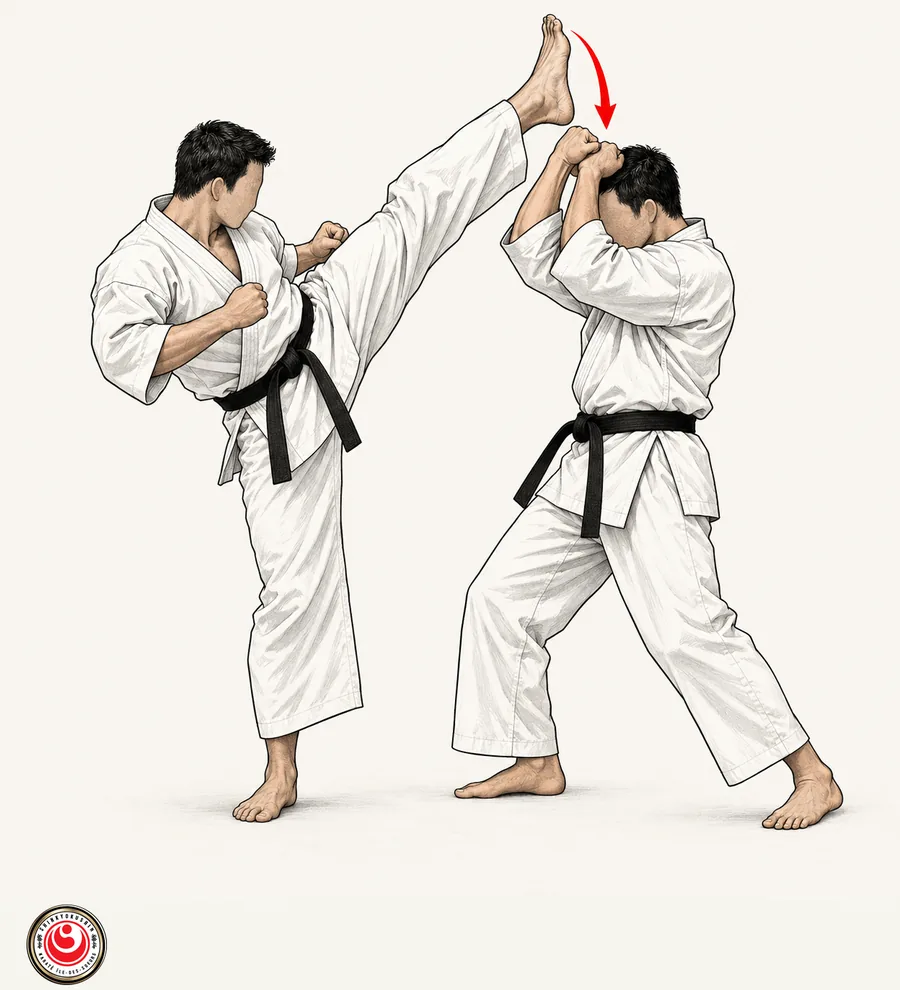
Axe kick to the head — permitted technique
01 Permitted

§Axe kick to the head Kakato-geri

The heel drops onto the head. Kicks to the head are allowed for adults; only hand and elbow techniques to the face are fouls.

Sources WKO 2026 — Fouls, a · EKO 2019 — art. 9.1

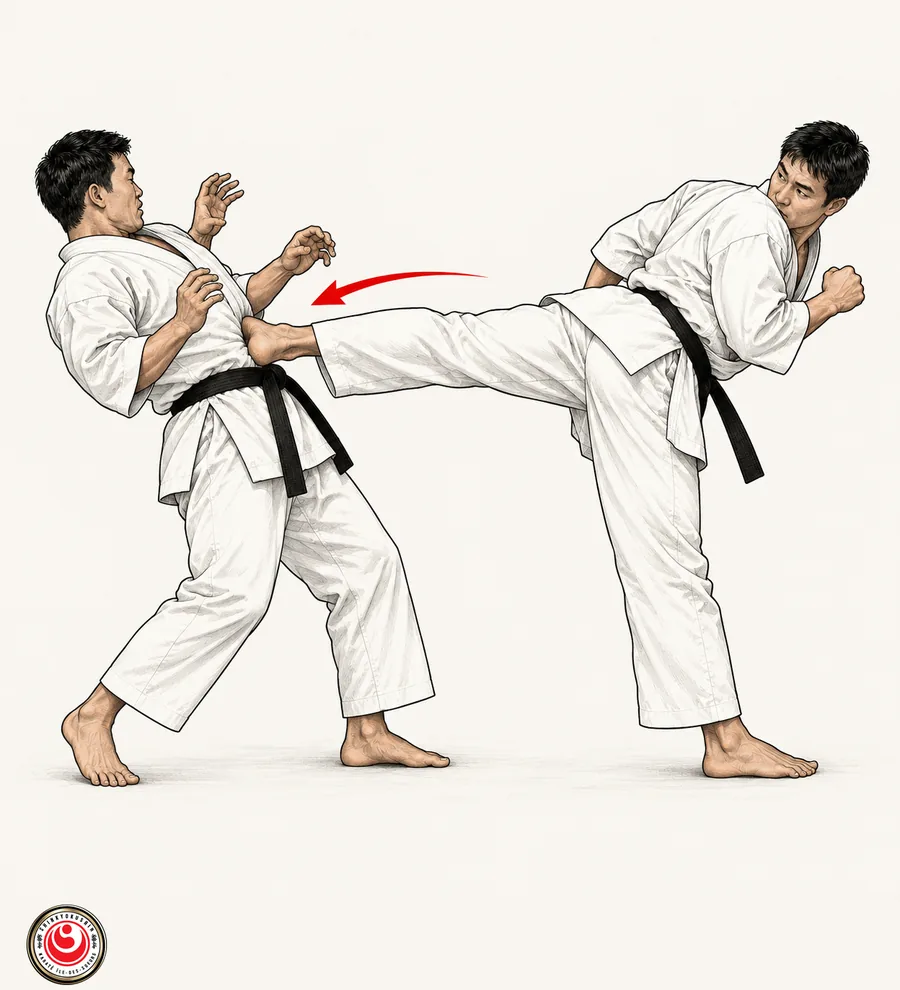
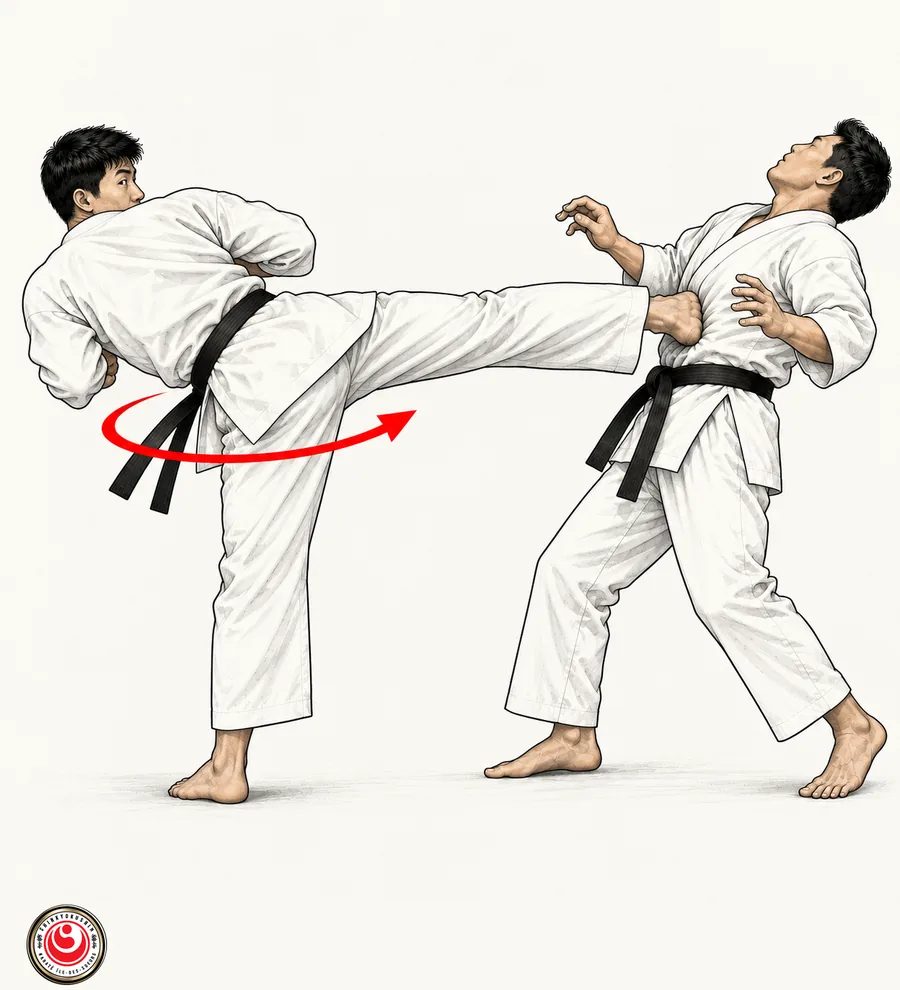
Back kick to the body — permitted technique
02 Permitted

§Back kick to the body Ushiro-geri

The heel thrusts backwards into the trunk. Neither the groin nor the knee joint is a target.

Sources WKO 2026 — Fouls, b and n

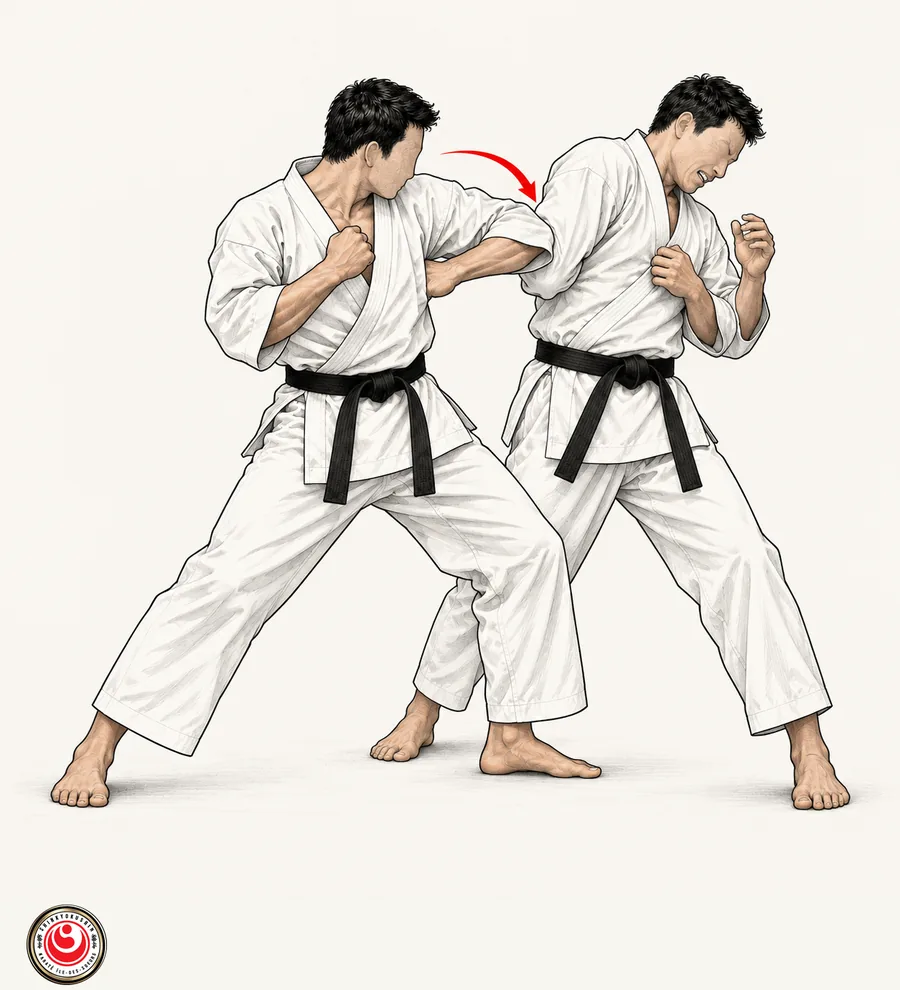
Elbow strike to the body — permitted technique
03 Permitted

§Elbow strike to the body Hiji-uchi

The elbow strikes the trunk. The elbow strike (hiji-uchi) can score ippon or waza-ari; to the face or neck it is a foul, and so is a downward elbow onto the shoulder or collarbone.

Sources WKO 2026 — Ippon and waza-ari; fouls, a and t

Straight punch to the body — permitted technique
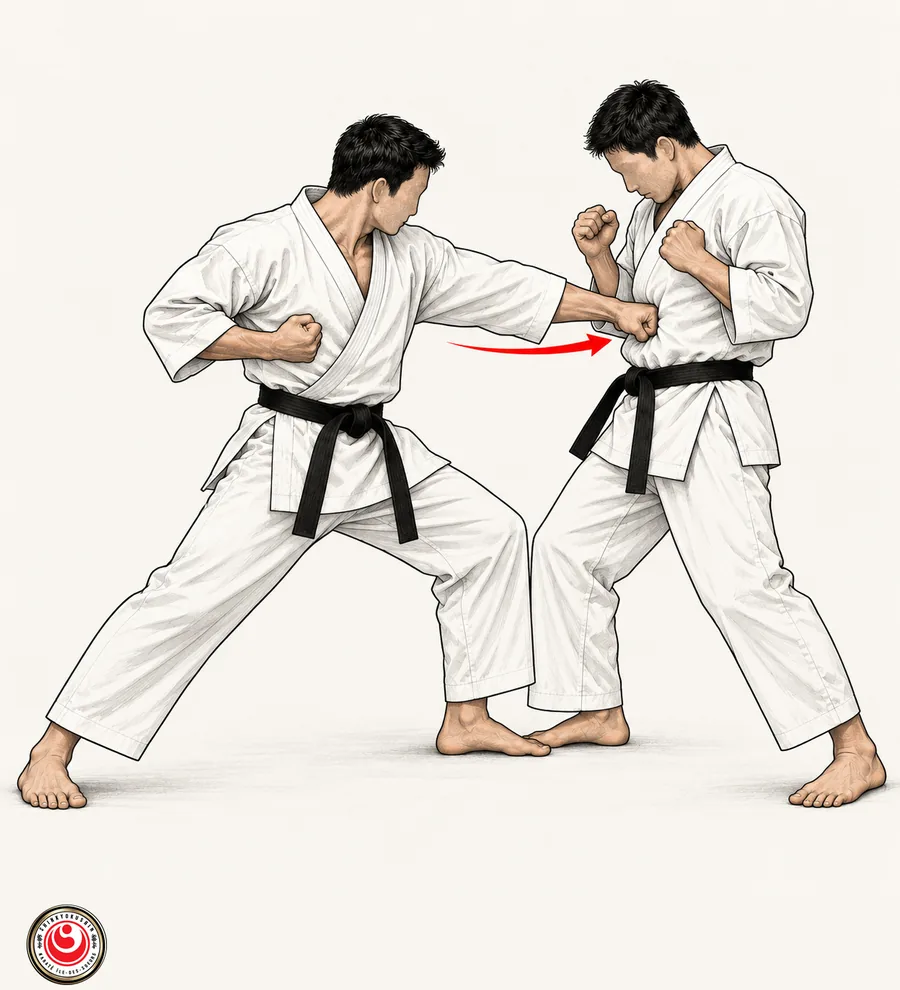
04 Permitted

§Straight punch to the body Seiken-tsuki

The fist strikes straight into the body. The punch (tsuki) is the first technique named for ippon; hand techniques to the face remain prohibited.

Sources WKO 2026 — Ippon and waza-ari; fouls, a

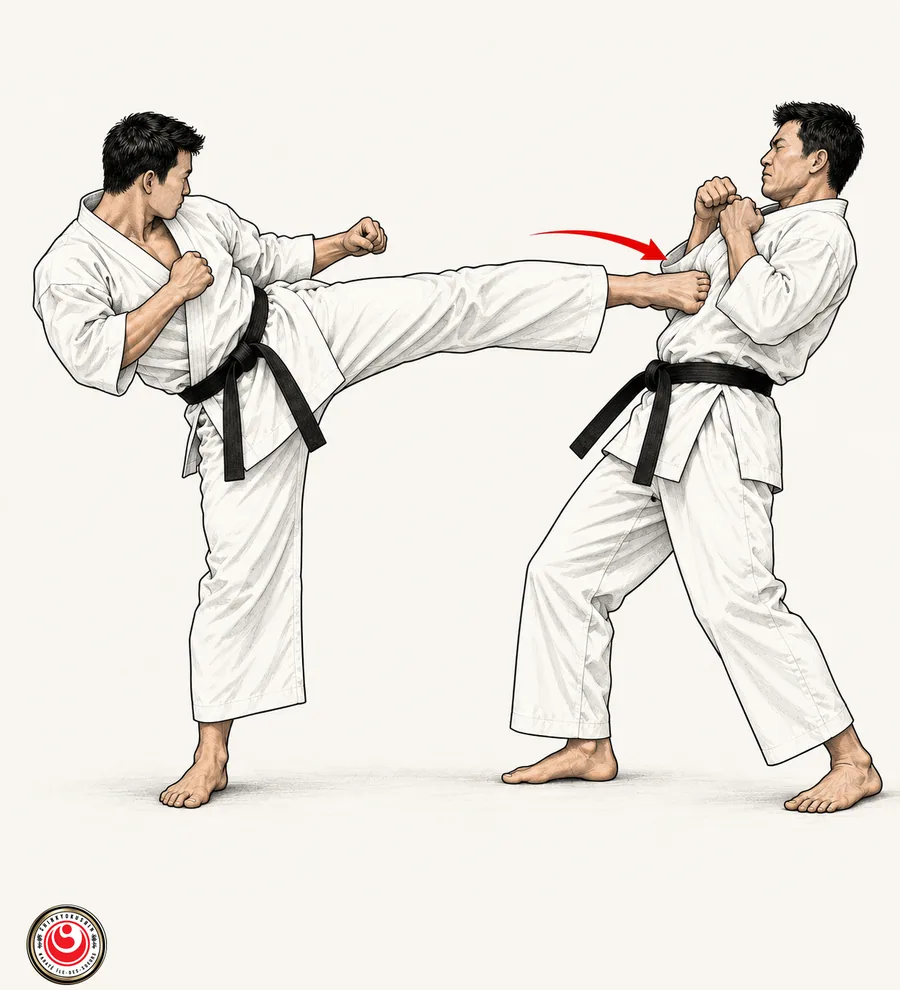
Front kick to the body — permitted technique
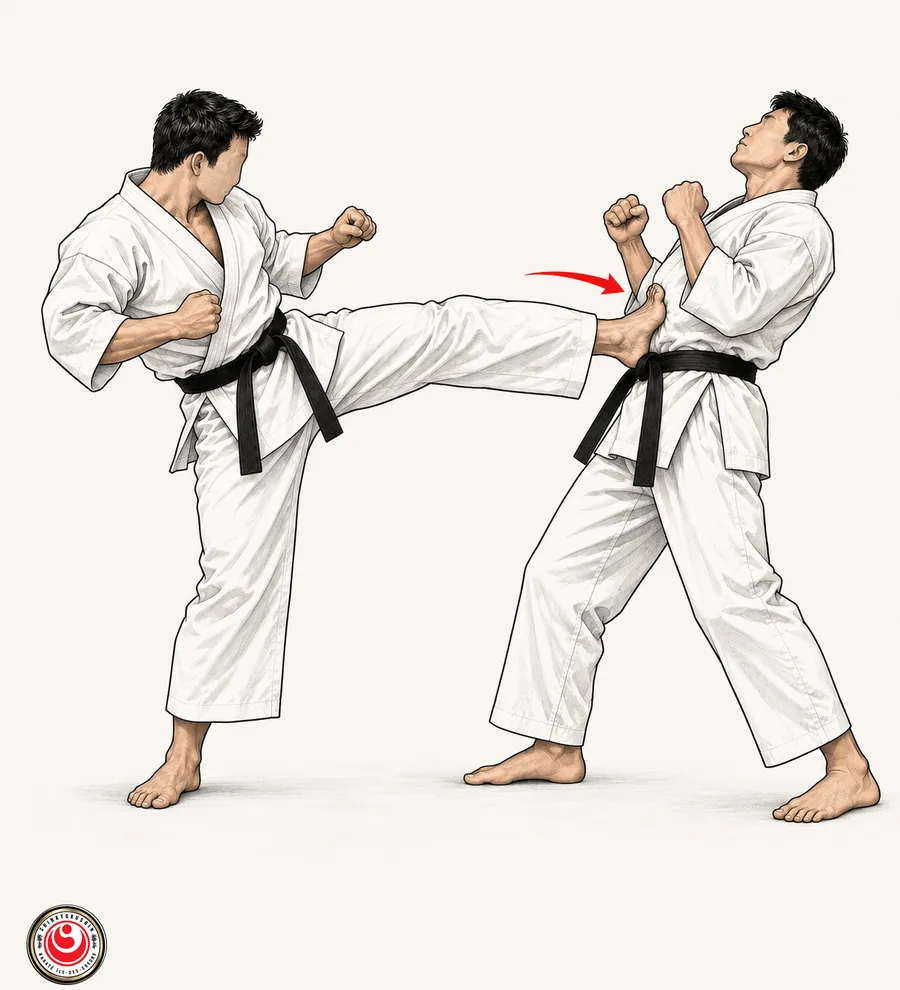
05 Permitted

§Front kick to the body Mae-geri

The foot thrusts forward into the trunk, above the groin. The EKO rules cite the mae-geri in their examples of waza-ari announcements.

Sources WKO 2026 — Fouls, b · EKO 2019 — art. 17.6, pp. 18-19

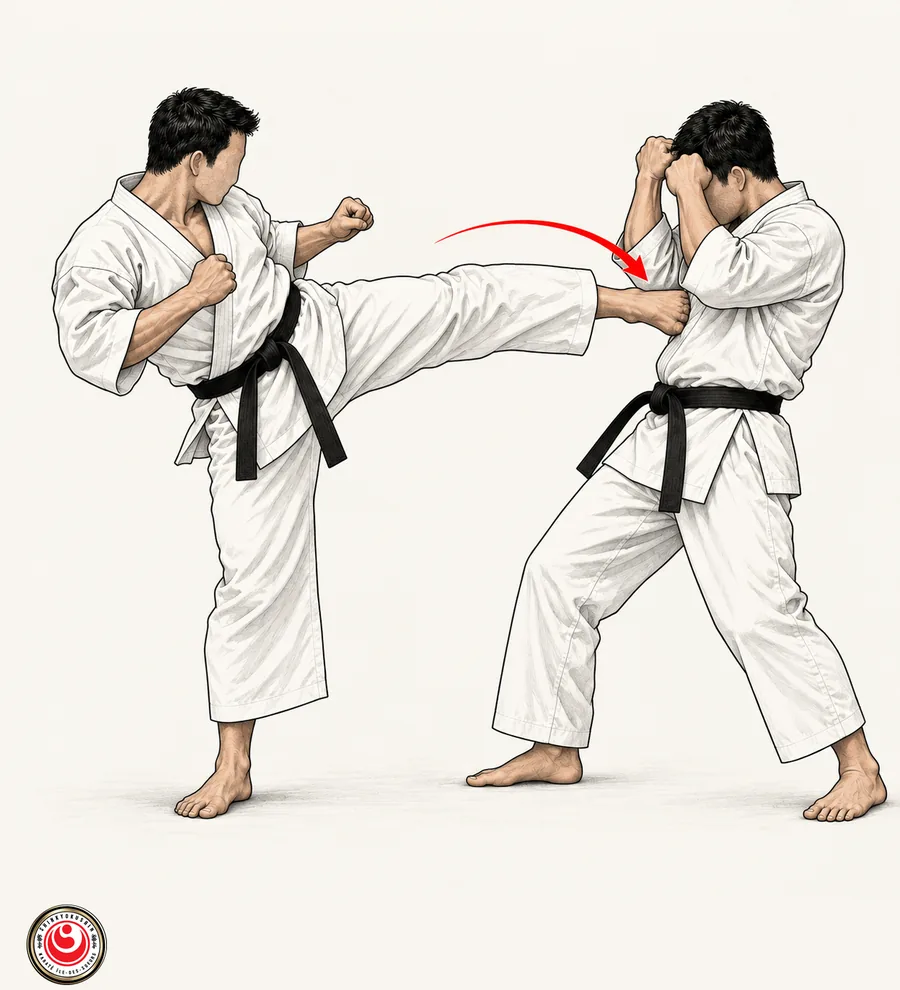
High roundhouse kick — permitted technique
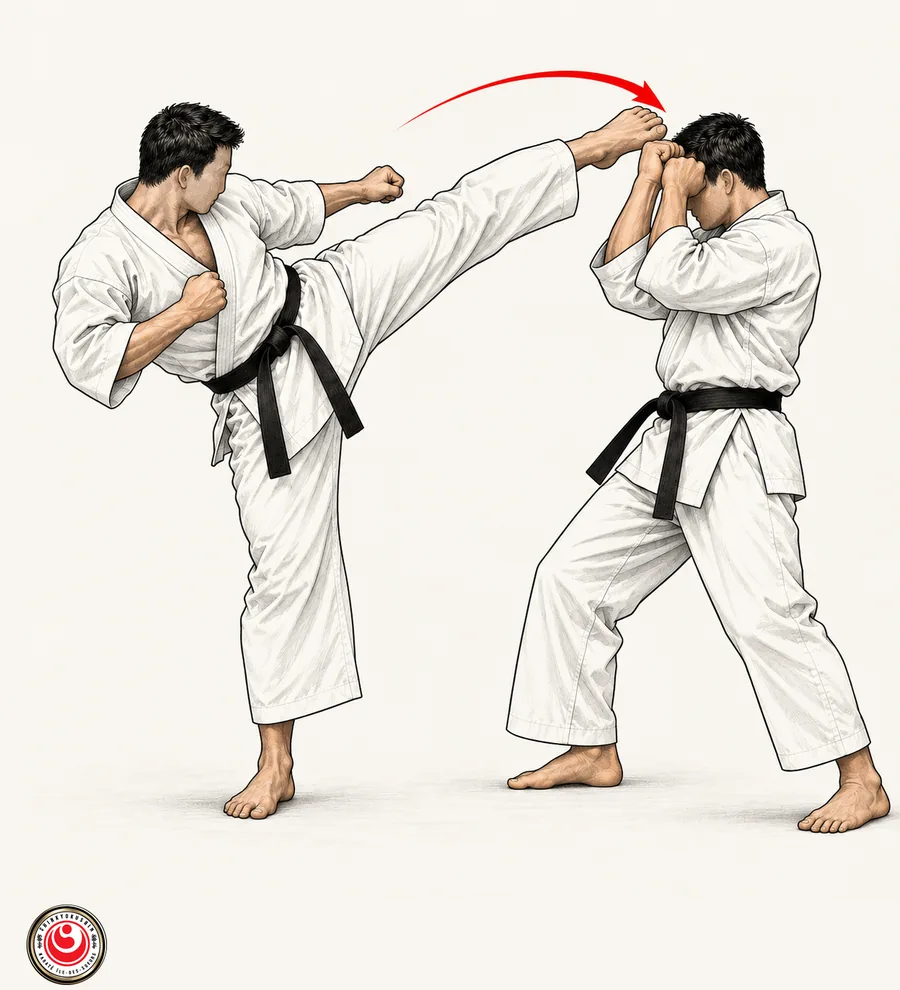
06 Permitted

§High roundhouse kick Jodan mawashi-geri

A circular path to the head, in adult kumite. The EKO rules cite it as an example of ippon. For EKO cadets and juniors, only controlled contact, without injury, is allowed to the head.

Sources EKO 2019 — art. 17.6, p. 19; art. 19.9 and 20.9

Low kick, inside of the thigh — permitted technique
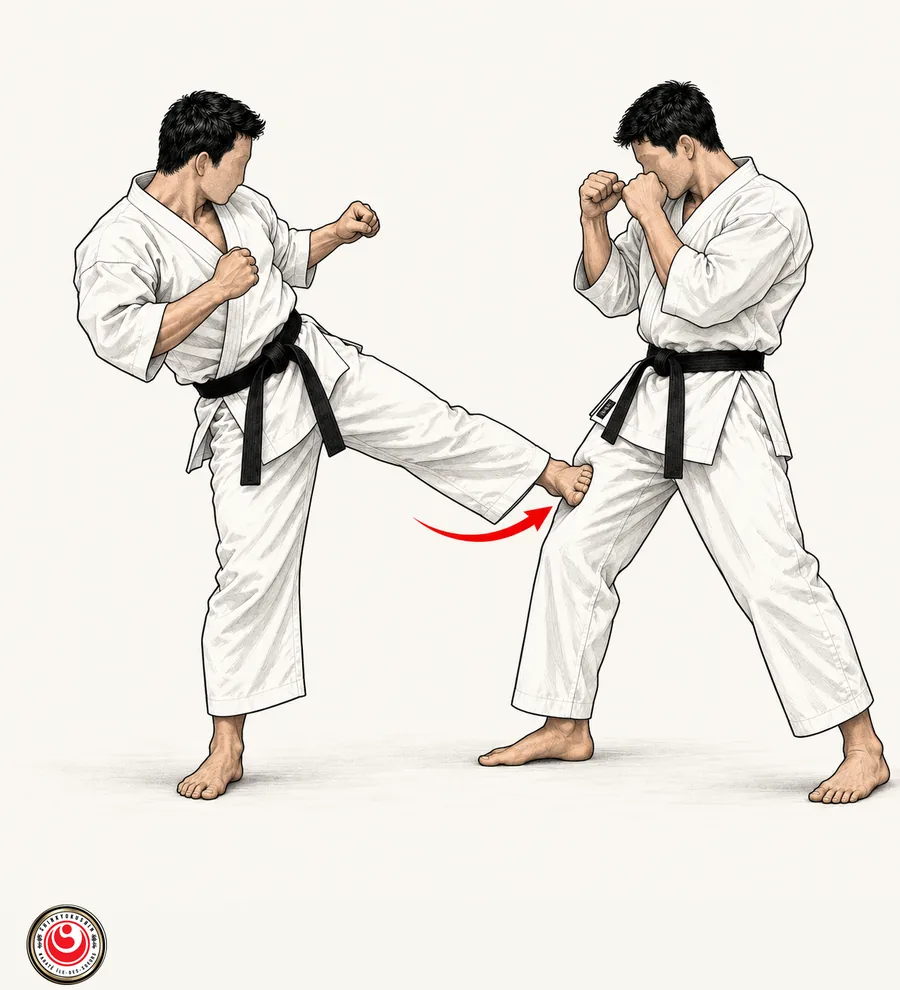
07 Permitted

§Low kick, inside of the thigh Gedan mawashi-geri

The shin strikes the inside of the thigh. The thigh is allowed; a direct attack on the knee joint, from the front or the side, is a foul.

Sources WKO 2026 — Fouls, n · EKO 2019 — art. 9.9

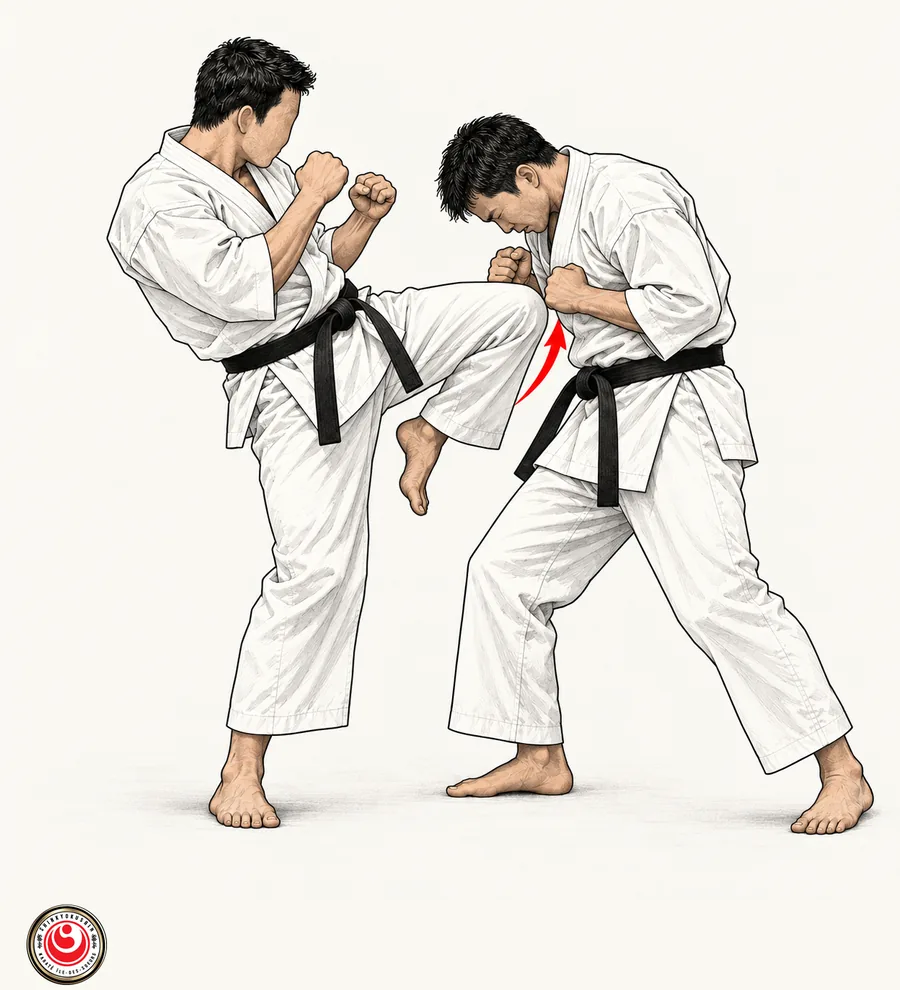
Knee strike to the body — permitted technique
08 Permitted

§Knee strike to the body Hiza-geri

The knee targets the trunk, without grabbing or clinching the opponent: grabbing and clinching are fouls, the knee strike is not.

Sources WKO 2026 — Fouls, d, f and i

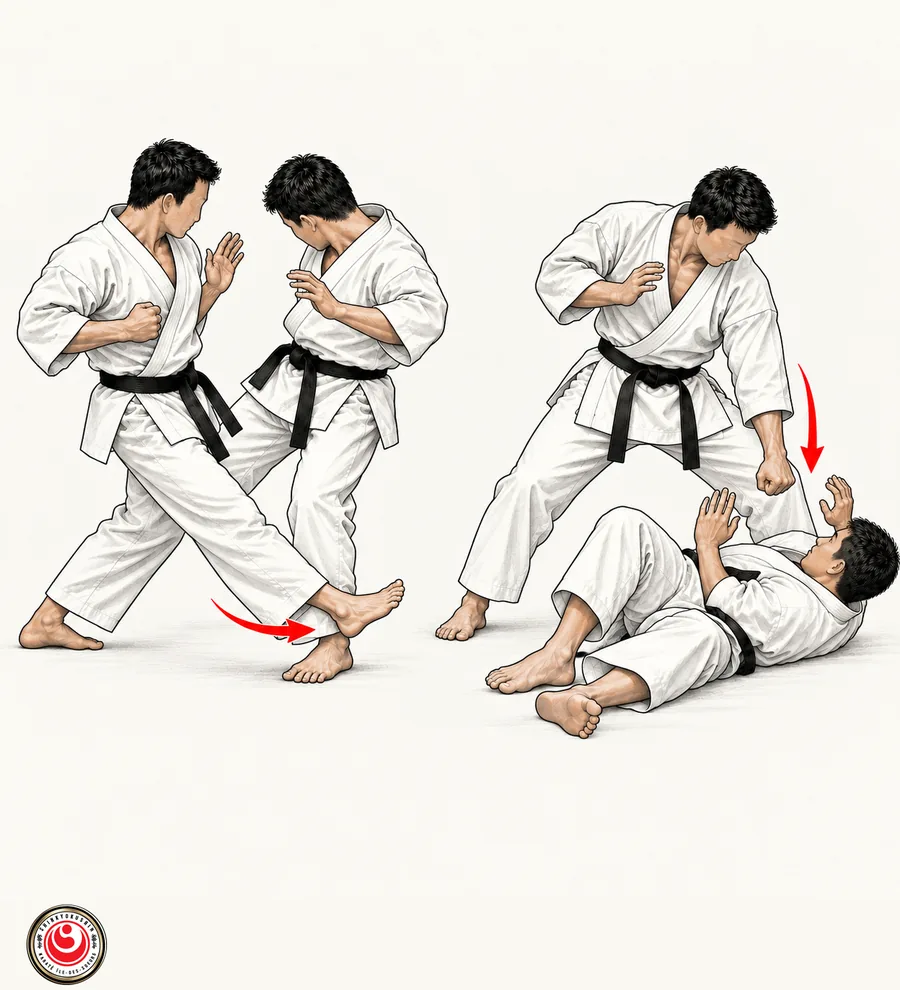
Sweep followed by a controlled punch — permitted technique
09 Permitted

§Sweep followed by a controlled punch Ashi-barai + gedan-zuki

A foot sweep (ashi-barai) that puts the opponent down, followed by a well-timed low punch (gedan-zuki), scores waza-ari under the WKO 2026 rules. Striking a downed opponent with contact remains a foul; the EKO allows only a non-contact tsuki to the body.

Sources WKO 2026 — Waza-ari, d; fouls, l · EKO 2019 — art. 9.11

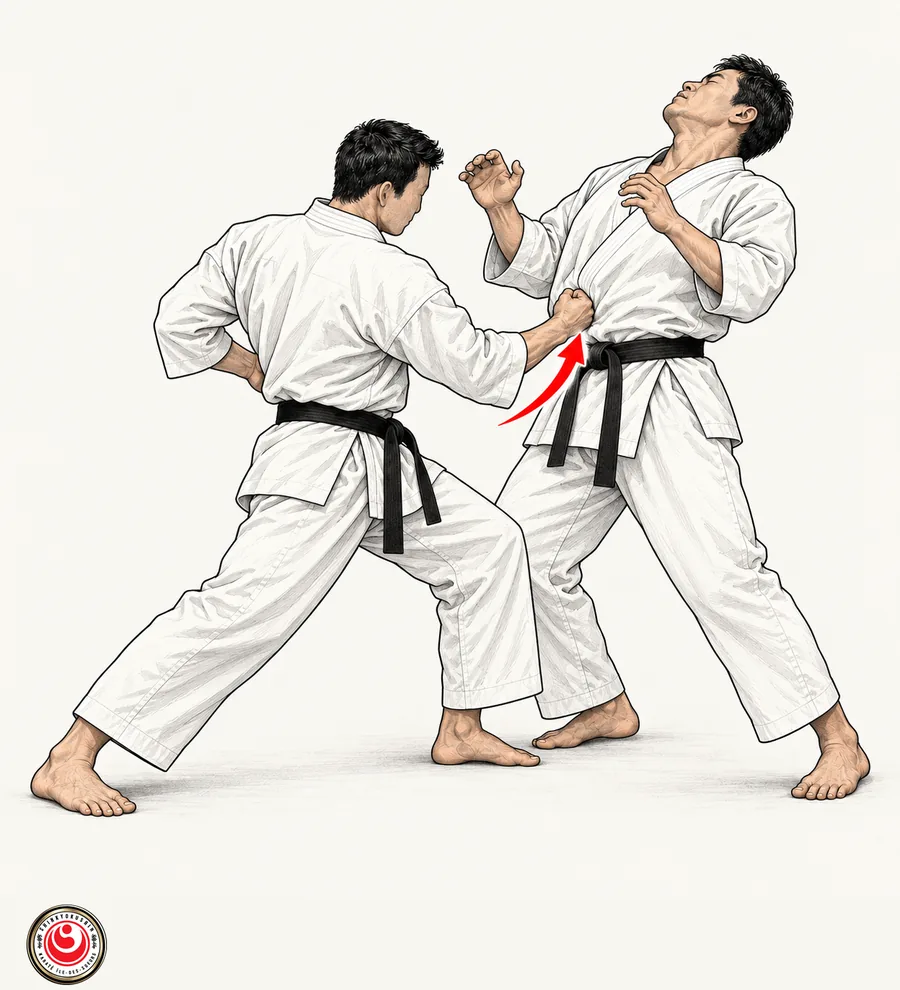
Rising punch to the body — permitted technique
10 Permitted

§Rising punch to the body Shita-tsuki

The fist rises into the lower trunk, above the groin. Attacks to the groin (kinteki) are fouls.

Sources WKO 2026 — Fouls, b · EKO 2019 — art. 9.2

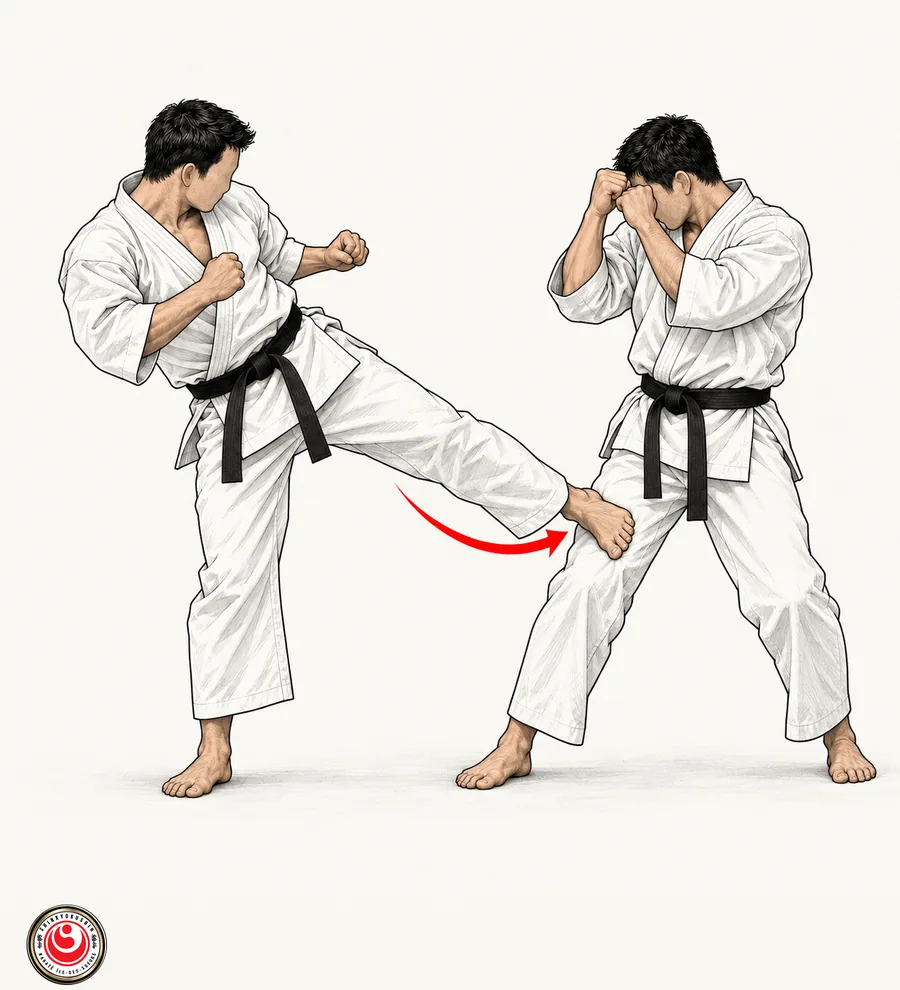
Low kick, outside of the thigh — permitted technique
11 Permitted

§Low kick, outside of the thigh Gedan mawashi-geri

The shin strikes the outside of the thigh. The EKO rules cite the gedan mawashi-geri as an example of waza-ari. No direct kick to the knee.

Sources EKO 2019 — art. 17.6, p. 19; art. 9.9 · WKO 2026 — Fouls, n

Middle roundhouse kick — permitted technique
12 Permitted

§Middle roundhouse kick Chudan mawashi-geri

The circular kick lands on the trunk. Allowed at any age, provided the opponent is neither held nor down.

Sources WKO 2026 — Ippon and waza-ari; fouls, d and l

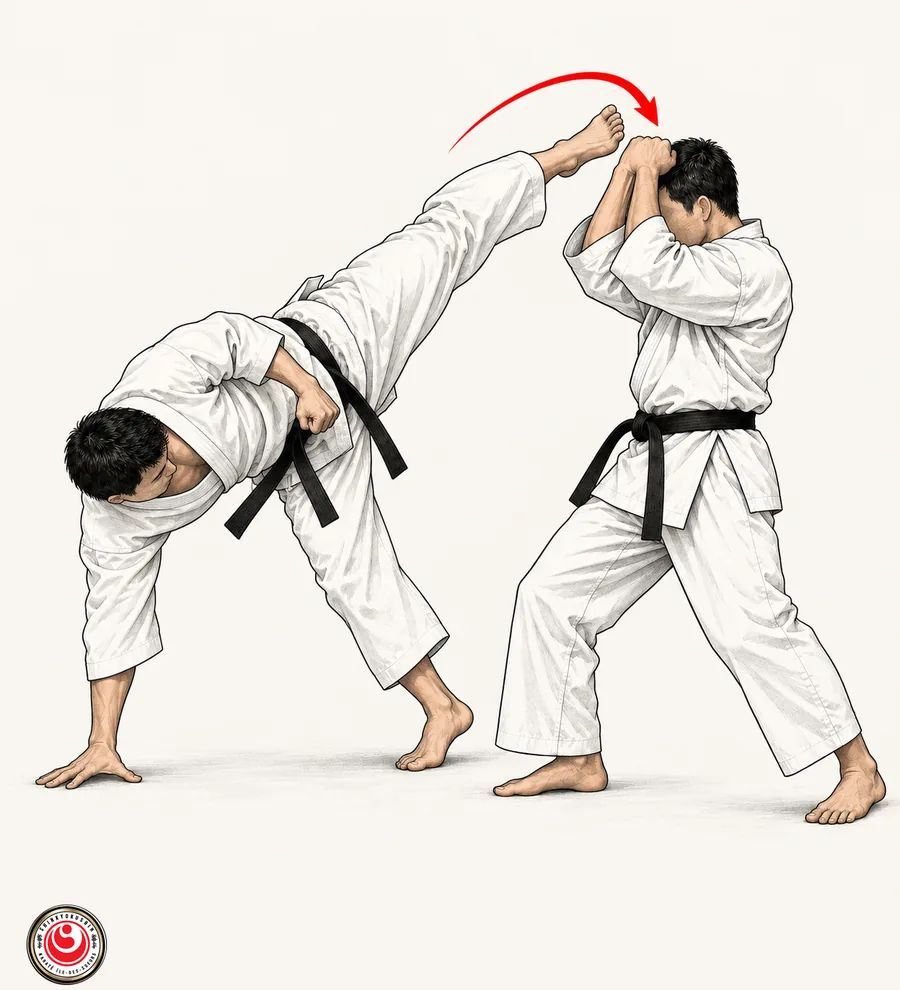
Rolling kick — permitted technique
13 Permitted

§Rolling kick Do-mawashi kaiten-geri

The body tips over and the heel arcs towards the head. The WKO 2026 rules name it: if it is dodged and followed by the opponent's gedan-zuki, it is the opponent who scores waza-ari.

Sources WKO 2026 — Waza-ari, d

Side kick to the body — permitted technique
14 Permitted

§Side kick to the body Yoko-geri

The foot edge (sokuto) thrusts sideways into the trunk. The same foot edge aimed at the knee joint would be a foul.

Sources WKO 2026 — Fouls, n

Spinning back kick — permitted technique
15 Permitted

§Spinning back kick Ushiro-geri

The body spins, then the heel thrusts backwards into the trunk. The spin is the attacker's: attacking an opponent from behind remains a foul.

Sources WKO 2026 — Fouls, k · EKO 2019 — art. 9.10

Twelve prohibited actions

Each one is a foul (hansoku) in the WKO 2026 rules, “Fouls” section, and in the EKO 2019 rules, article 9. A foul normally earns chui 1; an intentional or malicious foul can earn chui 2, or disqualification.

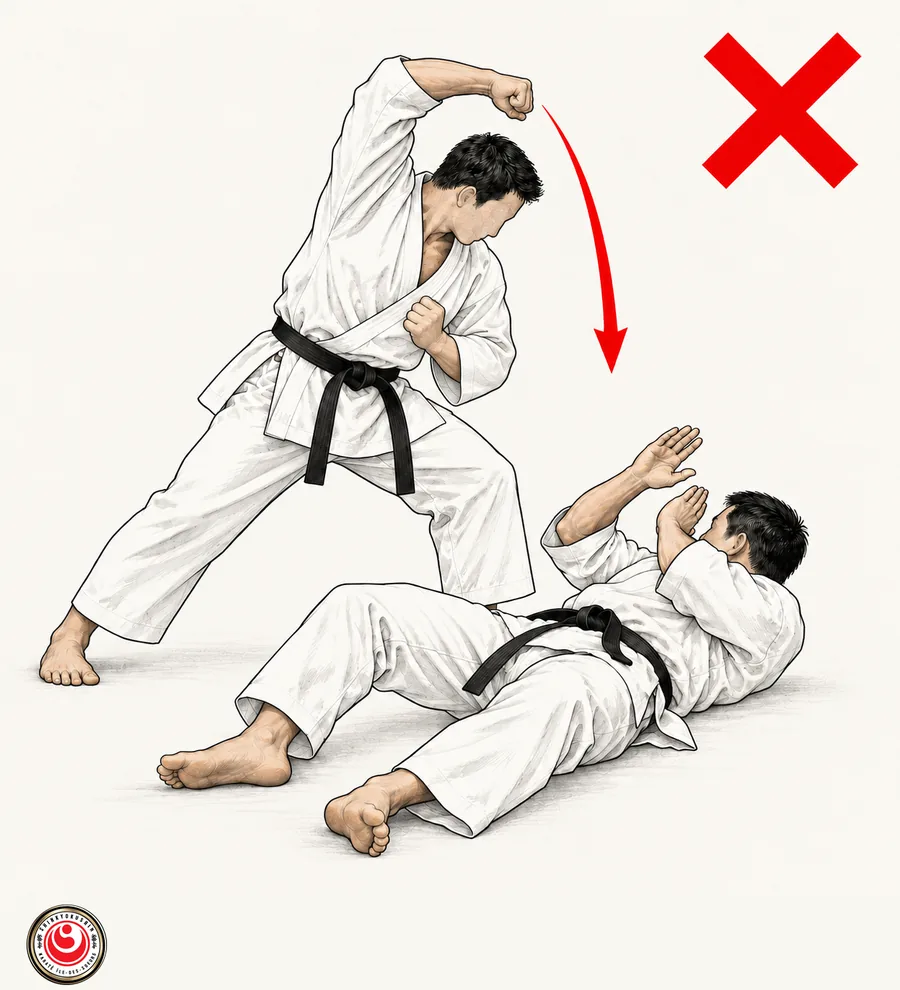
Attacking a downed opponent — prohibited action
01 Prohibited

§Attacking a downed opponent

Striking a fallen opponent is a foul. Only a non-contact punch to the body is tolerated by the EKO after a sweep.

Sources WKO 2026 — Fouls, l · EKO 2019 — art. 9.11

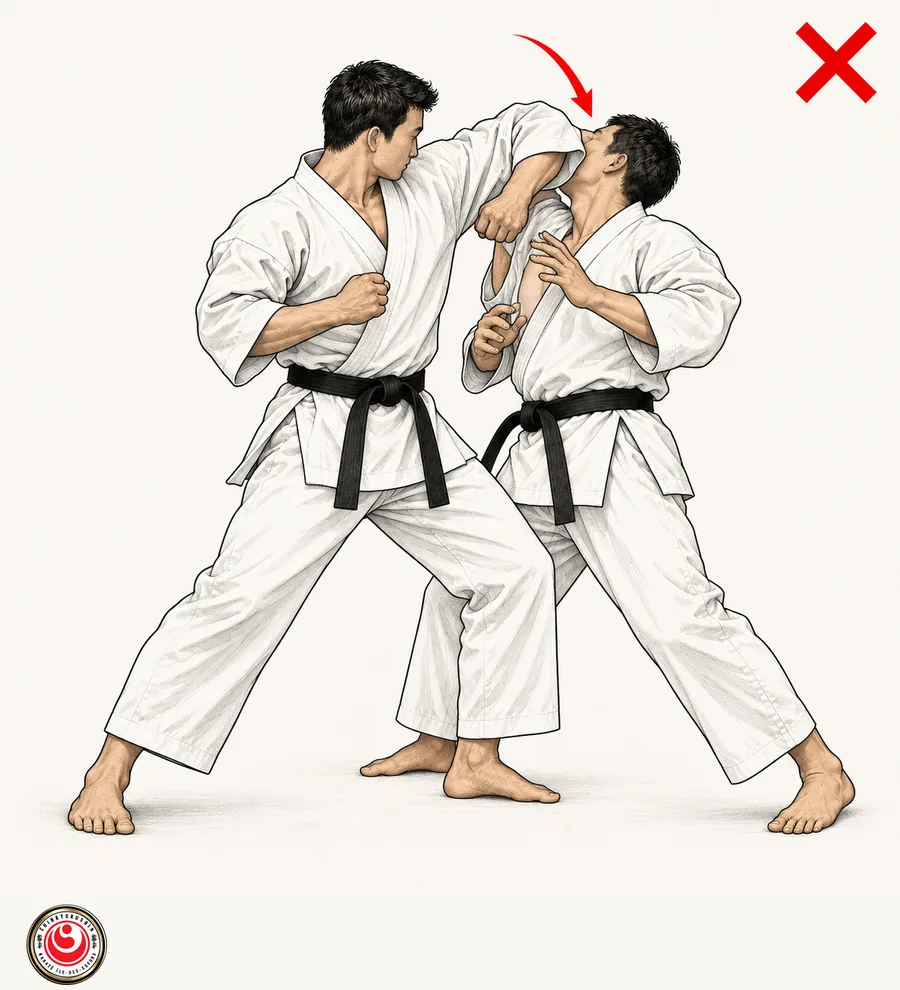
Elbow to the face — prohibited action
02 Prohibited

§Elbow to the face

The elbow touches the face: the elbow counts as a hand technique under the rules, and the face is a prohibited target.

Sources WKO 2026 — Fouls, a · EKO 2019 — art. 9.1

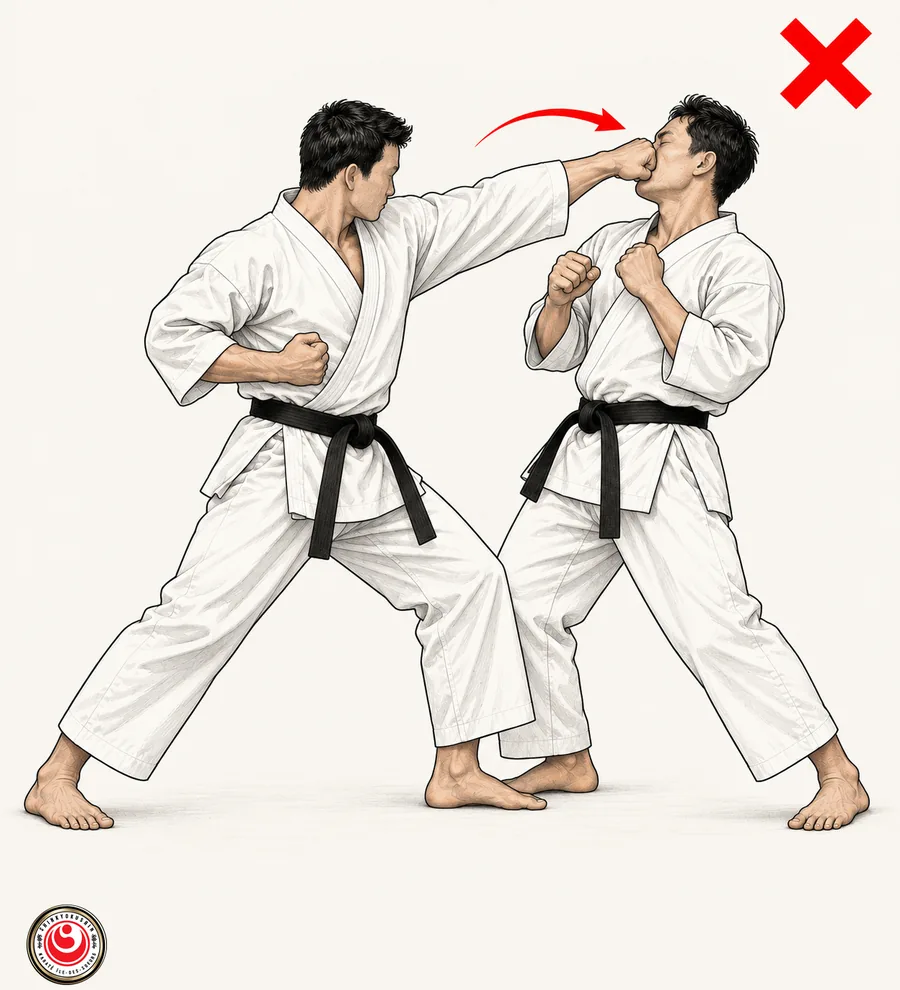
Hand strike to the face — prohibited action
03 Prohibited

§Hand strike to the face Ganmen kogeki

Fist, knife hand (shuto) or spear hand (nukite) to the face: a foul, even for a light touch of the fingertips. Feinting towards the face remains allowed.

Sources WKO 2026 — Fouls, a · EKO 2019 — art. 9.1

Grabbing and attacking — prohibited action
04 Prohibited

§Grabbing and attacking Tsukami

Grabbing the opponent's dogi, hands or feet is a foul, whatever the reason, and all the more so in order to strike.

Sources WKO 2026 — Fouls, d · EKO 2019 — art. 9.4

Groin kick — prohibited action
05 Prohibited

§Groin kick Kinteki kogeki

Any attack to the groin (kinteki), kick or otherwise, is a foul.

Sources WKO 2026 — Fouls, b · EKO 2019 — art. 9.2

Pushing with the head while attacking — prohibited action
06 Prohibited

§Pushing with the head while attacking

Attacking while leaning the head or the body against the opponent is a foul; so is pushing with the head.

Sources WKO 2026 — Fouls, g and j · EKO 2019 — art. 9.7

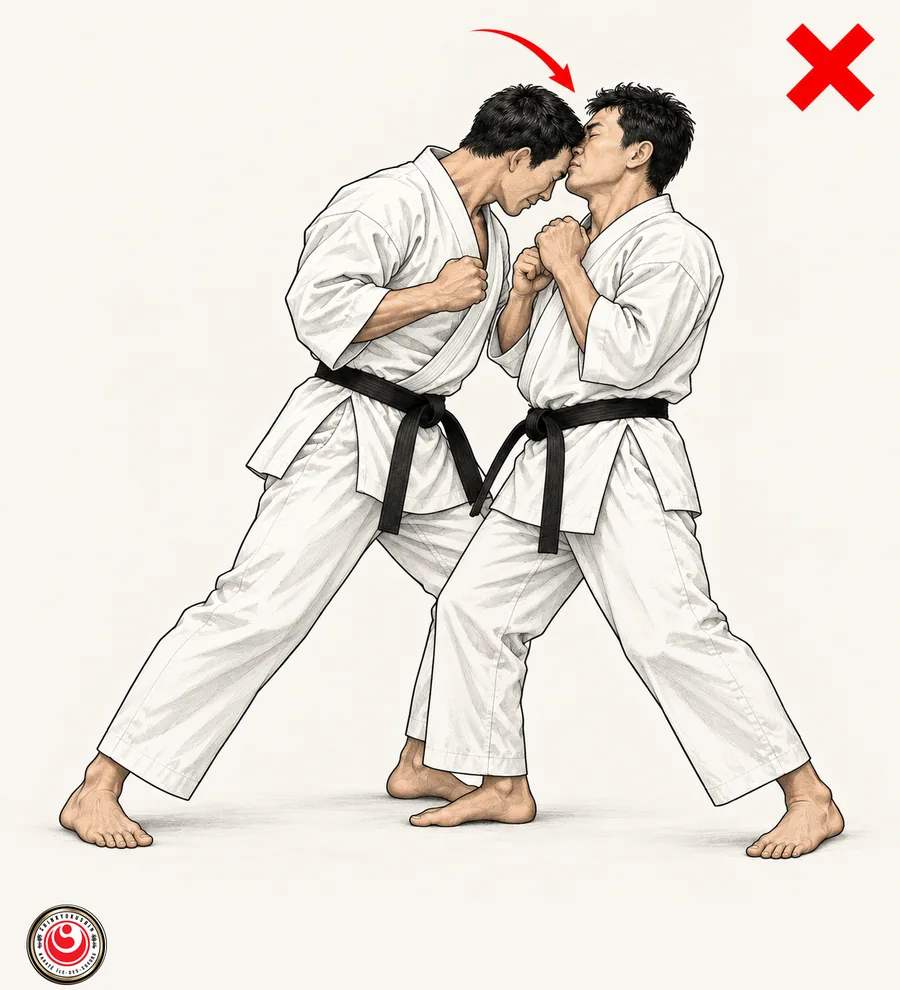
Headbutt — prohibited action
07 Prohibited

§Headbutt Zutsuki

The headbutt (zutsuki) is a foul in both rulebooks.

Sources WKO 2026 — Fouls, c · EKO 2019 — art. 9.3

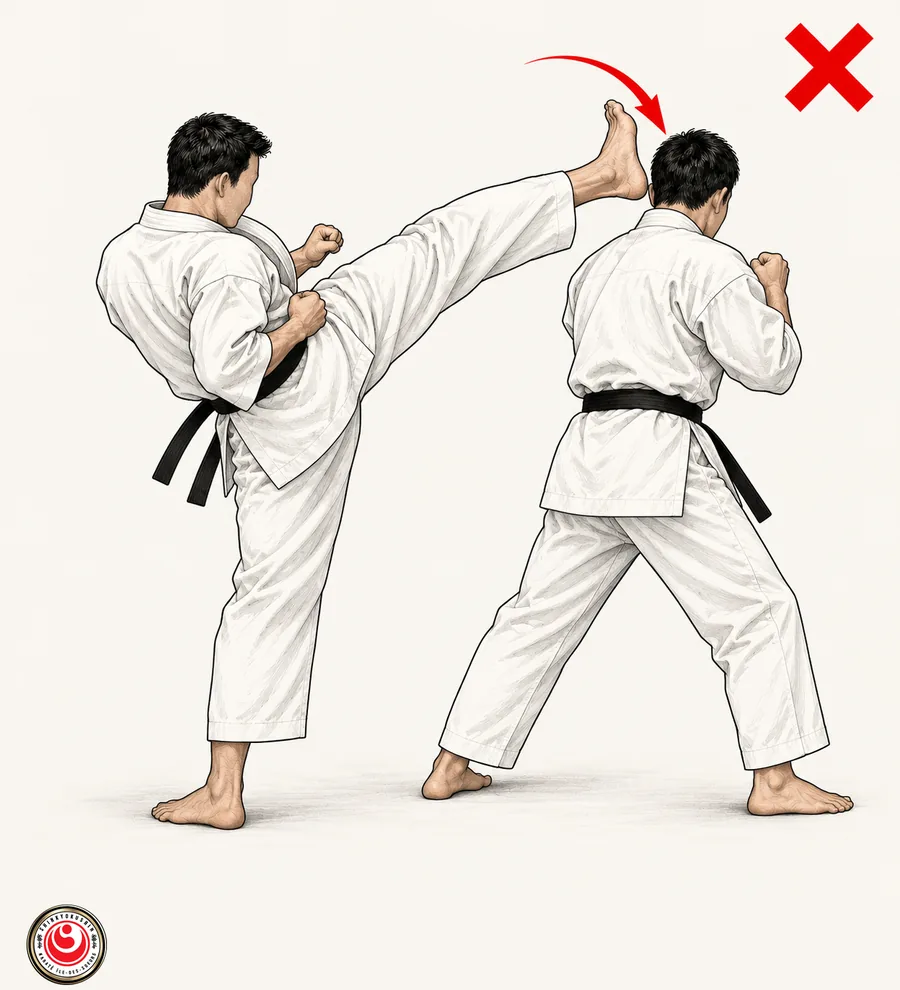
Kick to the head from behind — prohibited action
08 Prohibited

§Kick to the head from behind

Attacks from behind are fouls, to the head as anywhere else.

Sources WKO 2026 — Fouls, k · EKO 2019 — art. 9.10

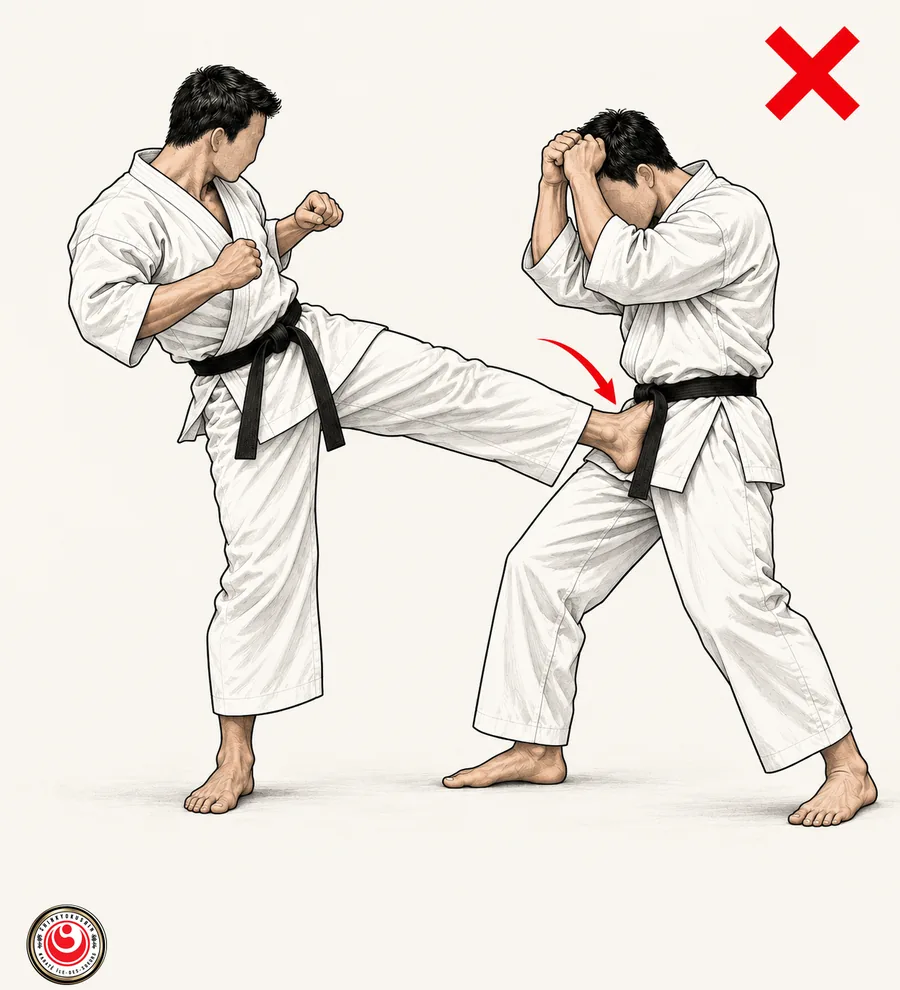
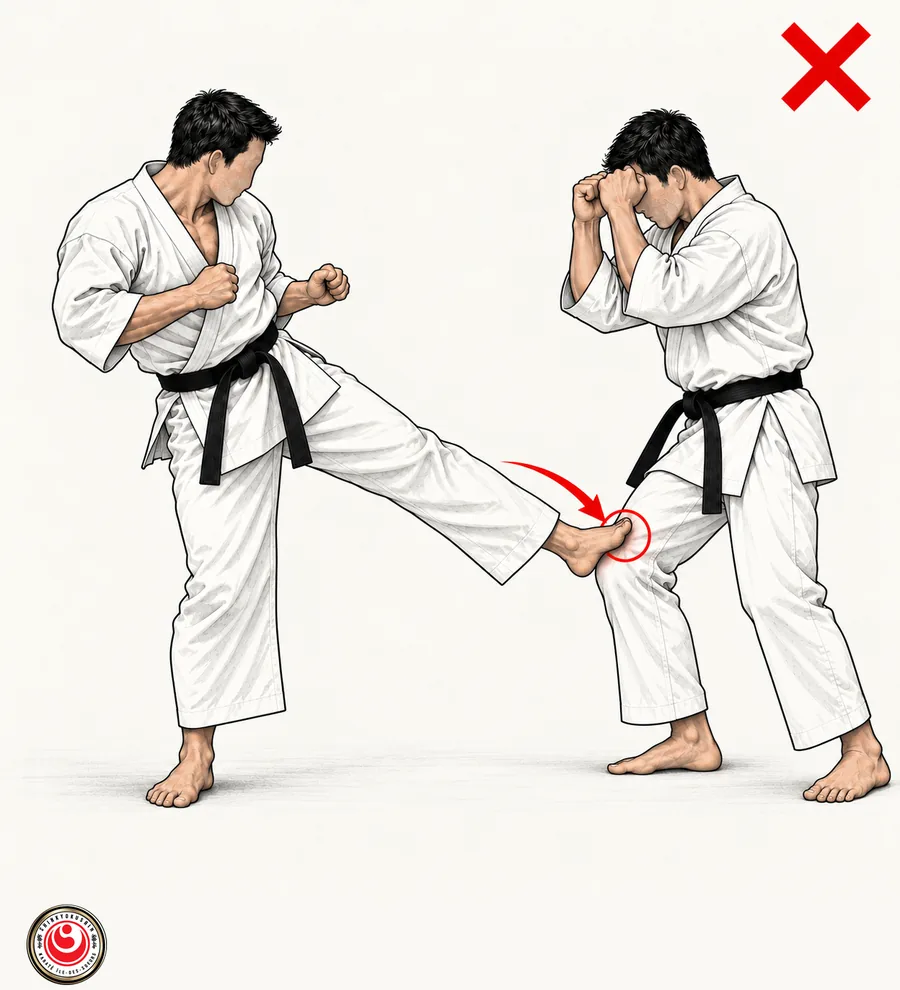
Direct kick to the knee — prohibited action
09 Prohibited

§Direct kick to the knee

The foot attacks the knee joint, from the front or the side, with the ball (chusoku) or the edge (sokuto) of the foot: a foul. The thigh, on the other hand, is allowed.

Sources WKO 2026 — Fouls, n · EKO 2019 — art. 9.9

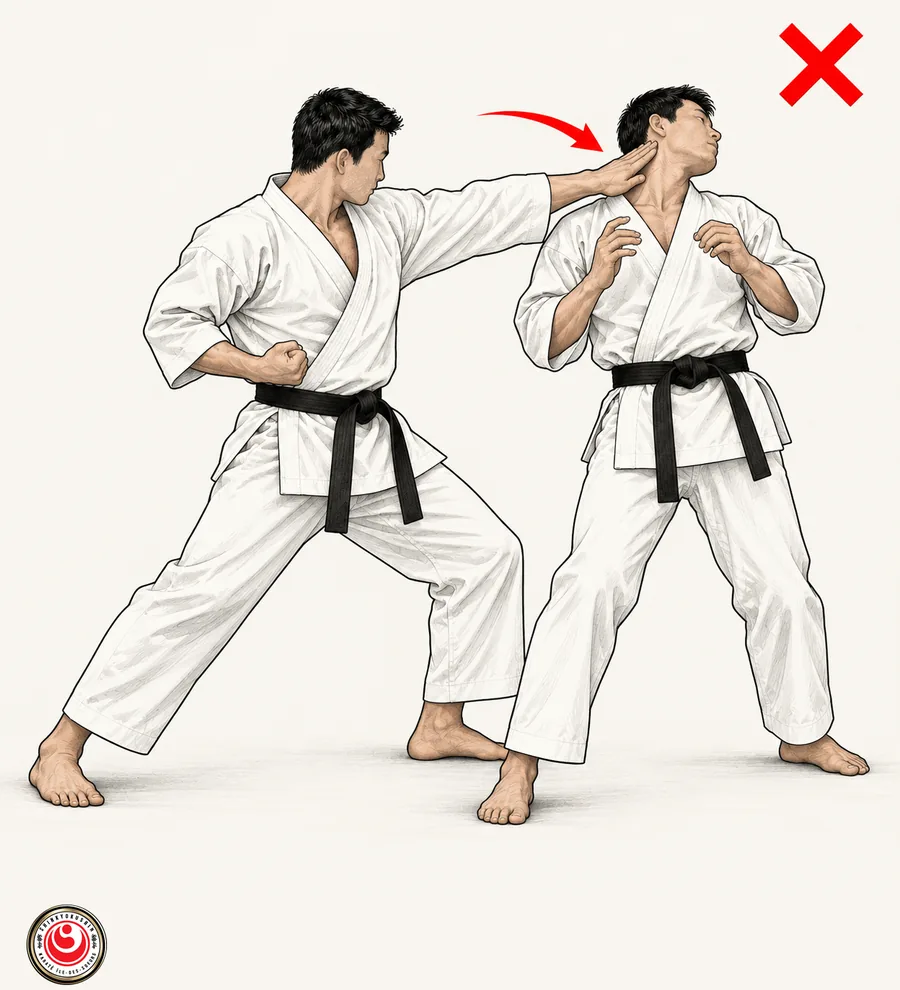
Hand strike to the neck — prohibited action
10 Prohibited

§Hand strike to the neck

The neck is a prohibited target for hand and elbow techniques.

Sources WKO 2026 — Fouls, a · EKO 2019 — art. 9.1

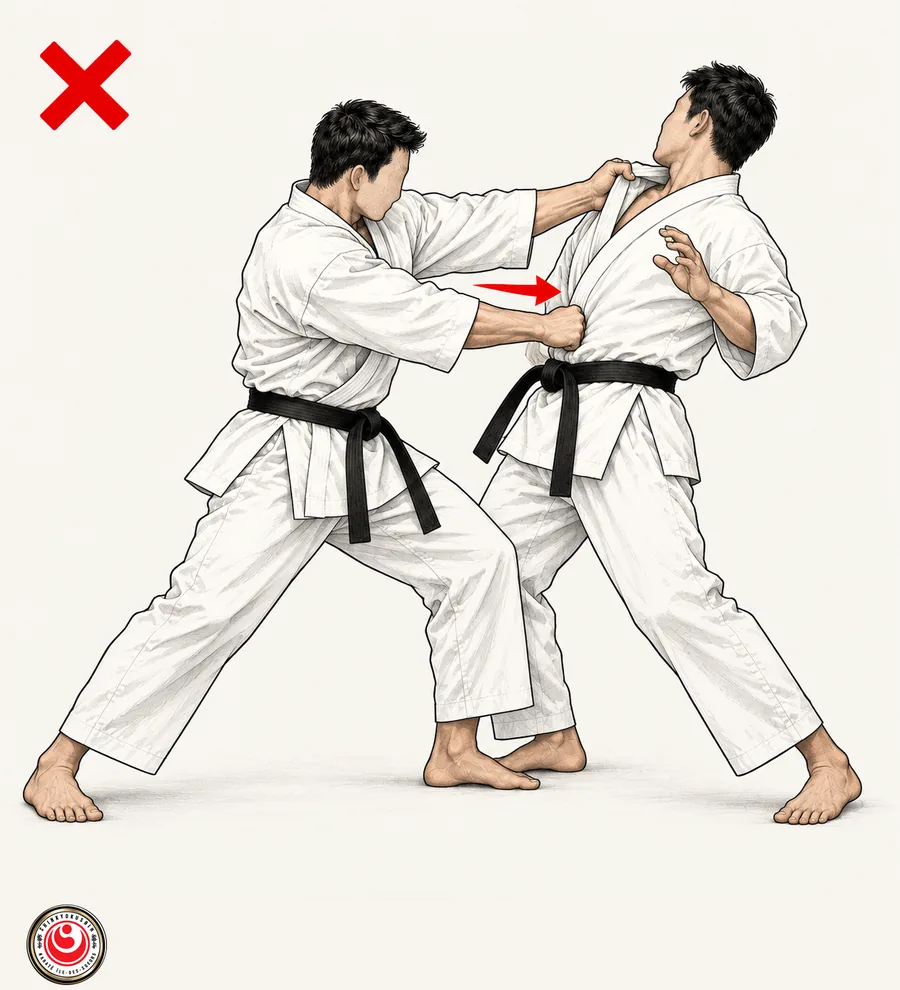
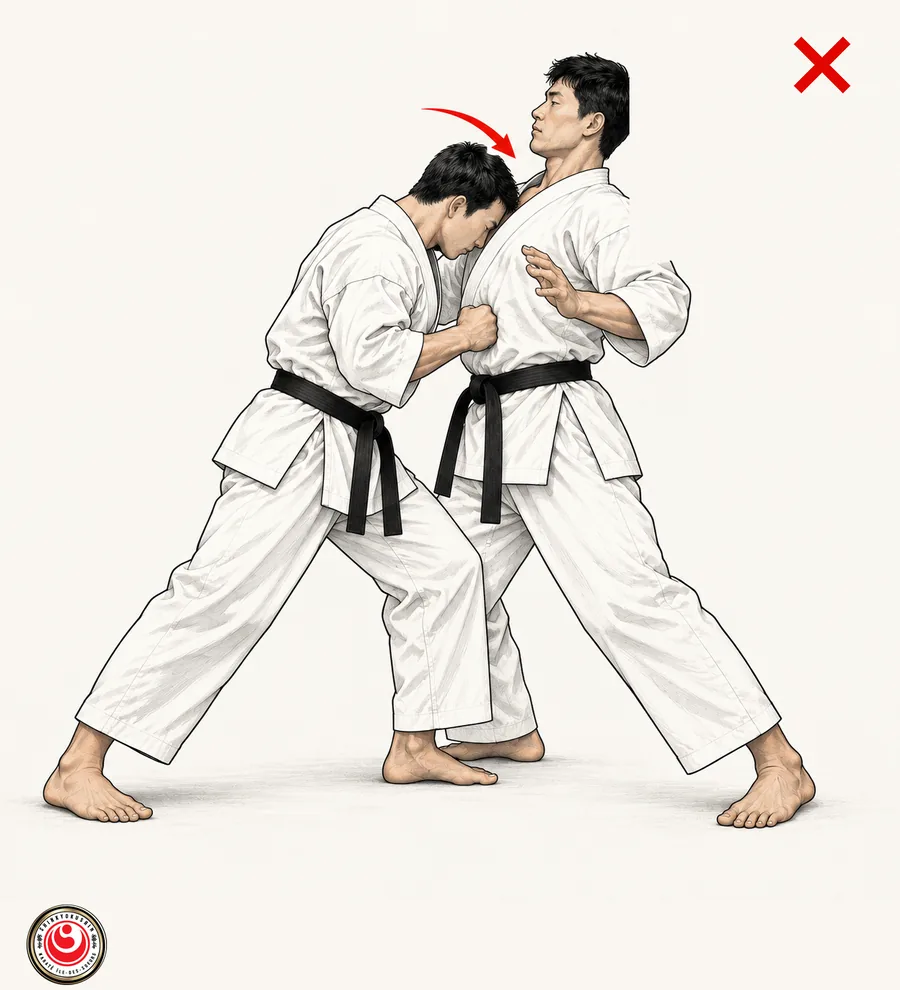
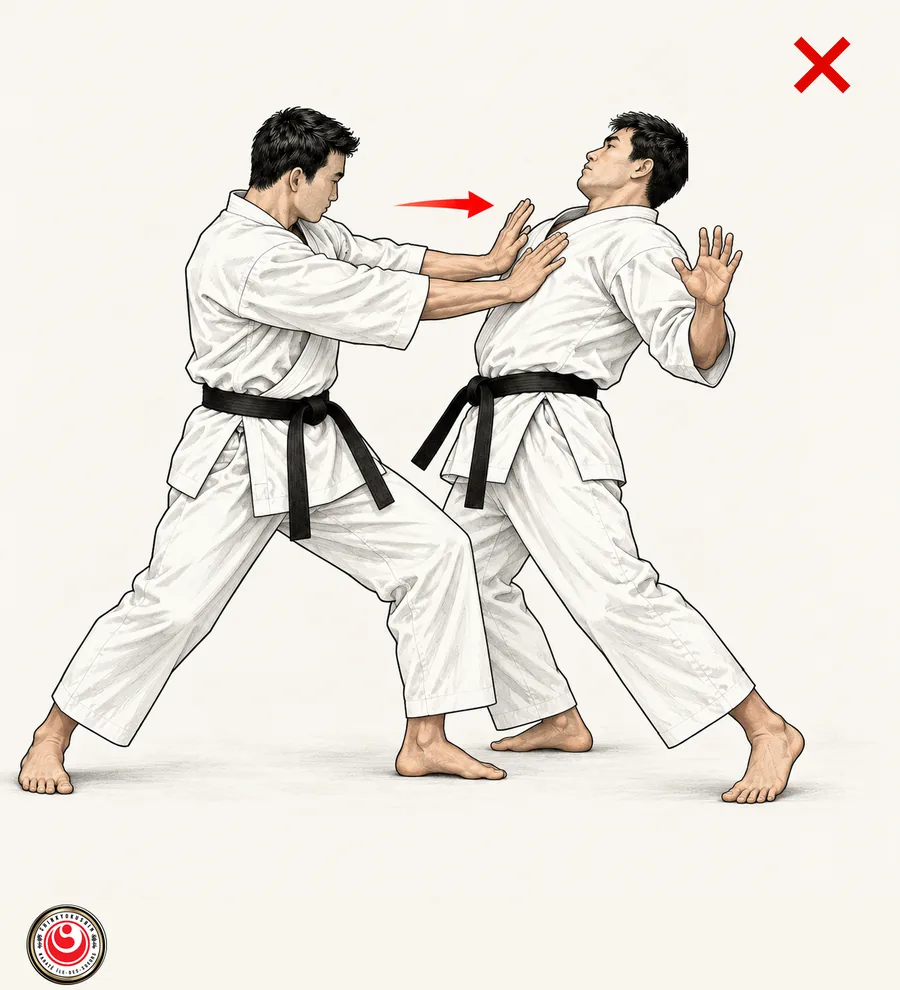
Pushing with the hands — prohibited action
11 Prohibited

§Pushing with the hands Oshi

Pushing the opponent with the palm, the fist, the head or the body is a foul, even with one hand. The EKO calls the open-hand push shotei-oshi.

Sources WKO 2026 — Fouls, g · EKO 2019 — art. 9.6; art. 17.6, p. 17

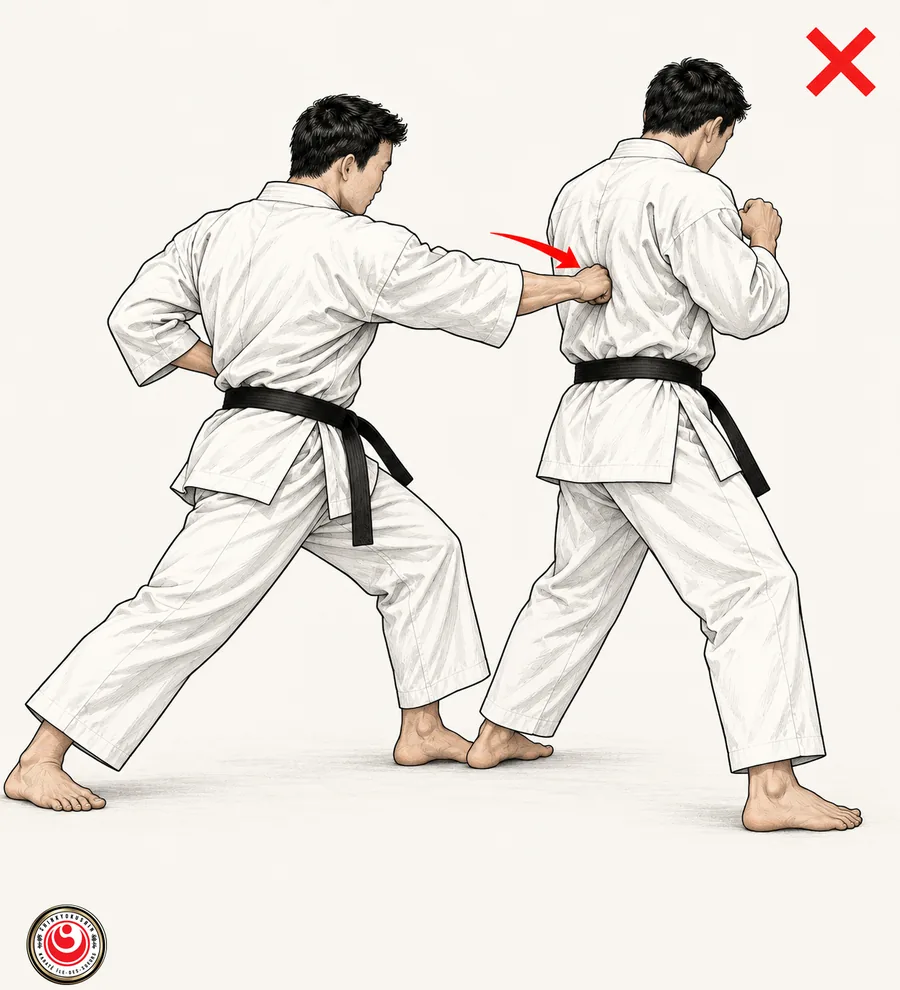
Striking the spine from behind — prohibited action
12 Prohibited

§Striking the spine from behind

Any intentional attack to the spine from behind is a foul.

Sources EKO 2019 — art. 9.10 · WKO 2026 — Fouls, k

Original drawings by the dojo (2026), made to explain: they are not taken from the rulebooks and do not replace their text. For young competitors, attacks to the head are limited or prohibited depending on the category: see “Protectors” and “Fouls”.

Questions

§Which techniques are permitted in Shinkyokushin kumite?

The rulebooks do not draw up a list: they name the techniques that can score and list the fouls. Under the WKO 2026 rules, the punch (tsuki), the kick (keri), the elbow strike (hiji-uchi) “or a similar technique”, landed on a part of the body other than the prohibited areas, can score ippon or waza-ari; so can the sweep (ashi-barai) followed by a gedan-zuki. To the body and the thighs, everything is allowed; to the head, kicks are allowed for adults.

Sources for this answer WKO 2026 — Ippon and waza-ari · EKO 2019 — art. 8 and 9

§Which targets are prohibited?

The face and the neck for hand and elbow techniques (even a light touch), the groin (kinteki), the knee joint for direct kicks from the front or the side, the spine from behind, the shoulder and the collarbone for downward elbow strikes, and any opponent who is down or attacked from behind.

Sources for this answer WKO 2026 — Fouls, a, b, k, l, n and t · EKO 2019 — art. 9.1, 9.2, 9.9 to 9.11

§Are kicks to the head allowed for young competitors?

Not as for adults. For EKO cadets (15 to 17) and juniors (17 to 19), only controlled contact, without injury, is allowed to the head: uncontrolled or full-strength kicks to the head or neck, and front, side, downward, spinning or knee kicks to the head, are prohibited. Mandatory protectors (helmet, shin guards) also vary by category.

Sources for this answer EKO 2019 — art. 19.9 and 20.9

§Where do these drawings come from?

They are original drawings by the dojo, made in 2026 to explain the rules to parents, students and competitors. They are not taken from the WKO or EKO rulebooks, which remain the only texts that prevail; each caption cites the section or article it illustrates.

Sources for this answer WKO 2026 — Fouls · EKO 2019 — art. 9

Texts consulted

Every answer cites its text. The rulebooks belong to their organisations; when in doubt, the official document prevails.

  • WKO 2026 Regulation WKO Competition Rules (全世界空手道連盟 試合規約), revised edition of 29 July 2026 — Japanese text, unofficial translation Official document Official page
  • EKO 2019 Regulation EKO — Kumite Competition Regulation and Rules (17 March 2019) Official document

Unofficial translation from Japanese (Claude, for the dojo, October 2026); the original text prevails.

From the rulebook to the mat.

Rules are there to be understood; the rest is learned at the dojo on Nuns’ Island, with a free first class.

Book a free trial class