
Ages 4–13 · Nuns’ Island, Verdun
Karate
for kids
Confidence, discipline, focus and respect — in an atmosphere where kids have fun and come back smiling.
School founded on Nuns’ Island
Kids and adults trained
Years old — grouped by age and level
What karate changes in a child
Every parent walks into the dojo with a question. Here are the ones we hear most — and how we answer them, class after class.
Is your child being bullied at school?
Our young karatekas learn to stand tall, speak up and say no. Confidence shows.
Too much energy, not enough self-control?
Games, drills and dojo rituals channel that energy. Kids learn to listen, wait their turn and follow instructions.
Can a shy child learn to stand up for herself?
Yes. With encouragement, achievable goals and an attentive instructor, shyness gives way to self-assurance — one class at a time.
How do you teach respect for oneself and for others?
The bow, dojo etiquette, the Dojo Kun: every class is a reminder that karate is for self-defence, as a last resort — never for attacking.
Not comfortable in team sports?
Karate is practised in a group, but everyone progresses at their own pace, on their own abilities. Nobody sits on the bench.
Want to get them moving — without them noticing?
Running, jumping, kicking, shouting: a karate class is intense and fun. Better sleep guaranteed that night.
A program designed for children
We don't teach children as “miniature adults”. Everything is adapted: the pace, the vocabulary, the games, the goals.
- Simple steps. Every technique is broken down into basic moves that are easy to get right.
- Groups by age and level. Your child trains with kids like them.
- Positive words only. We correct by encouraging. Self-esteem comes first.
- Self-defence, never aggression. Violence solves nothing — taught from the very first class.
- Black-belt instructors, trained in Shinkyokushin, teaching children since 2011.
- Parents welcome. You can watch the classes.
An hour that goes by too fast
The bow and the Dojo Kun to get in the right mindset. A warm-up that feels like a game. Kihon — the basic techniques — repeated until the body remembers. Then kata, or kumite with helmet and gloves, where kids learn to give and take with control. And the final bow: you thank your partner and your instructor.
Eight benefits that last
Learning to defend yourself is only the beginning. What your child gains at the dojo stays with them for life.
Confidence
Mastering a kick, a block, a kata: every success builds self-esteem.
Goals
Belt after belt, kids learn that with patience and work, you reach what you aim for.
Focus
Listen, watch, repeat. The focus developed at the dojo carries over to the classroom.
Coordination
Balance, laterality, reflexes: karate makes kids better at every other sport.
Friendships
Training together, bowing to each other, cheering each other on. Dojo friendships last for years.
Character
Respect, courtesy, humility, non-violence: Kyokushin values, passed on in every class.
Health
Better than a screen: moving, sweating, breathing. A strong body and a calm mind.
Fun
Games, challenges, shouts of “OSU!”: kids come back because they have fun.
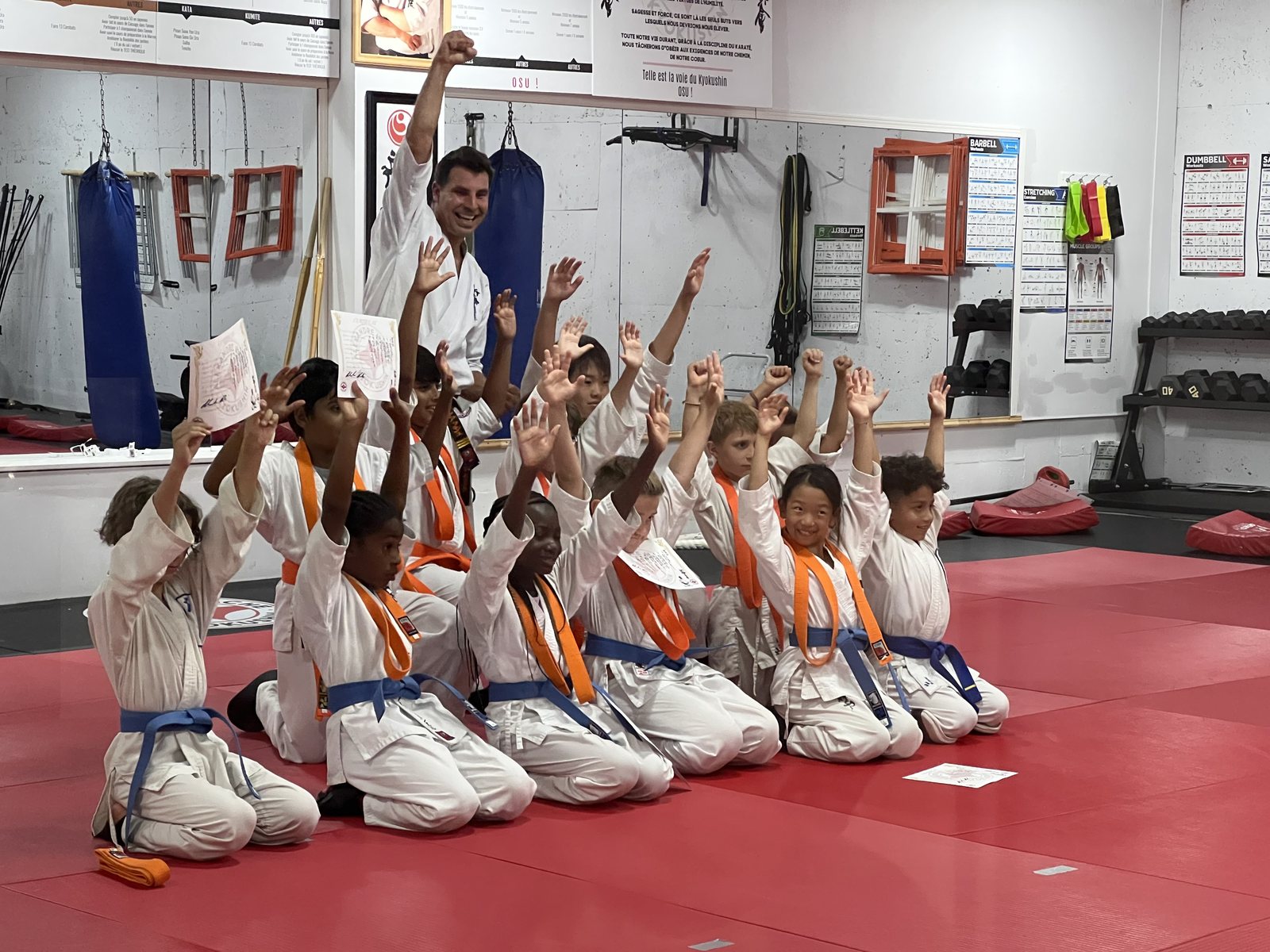
Belt after belt, tatami after tatami
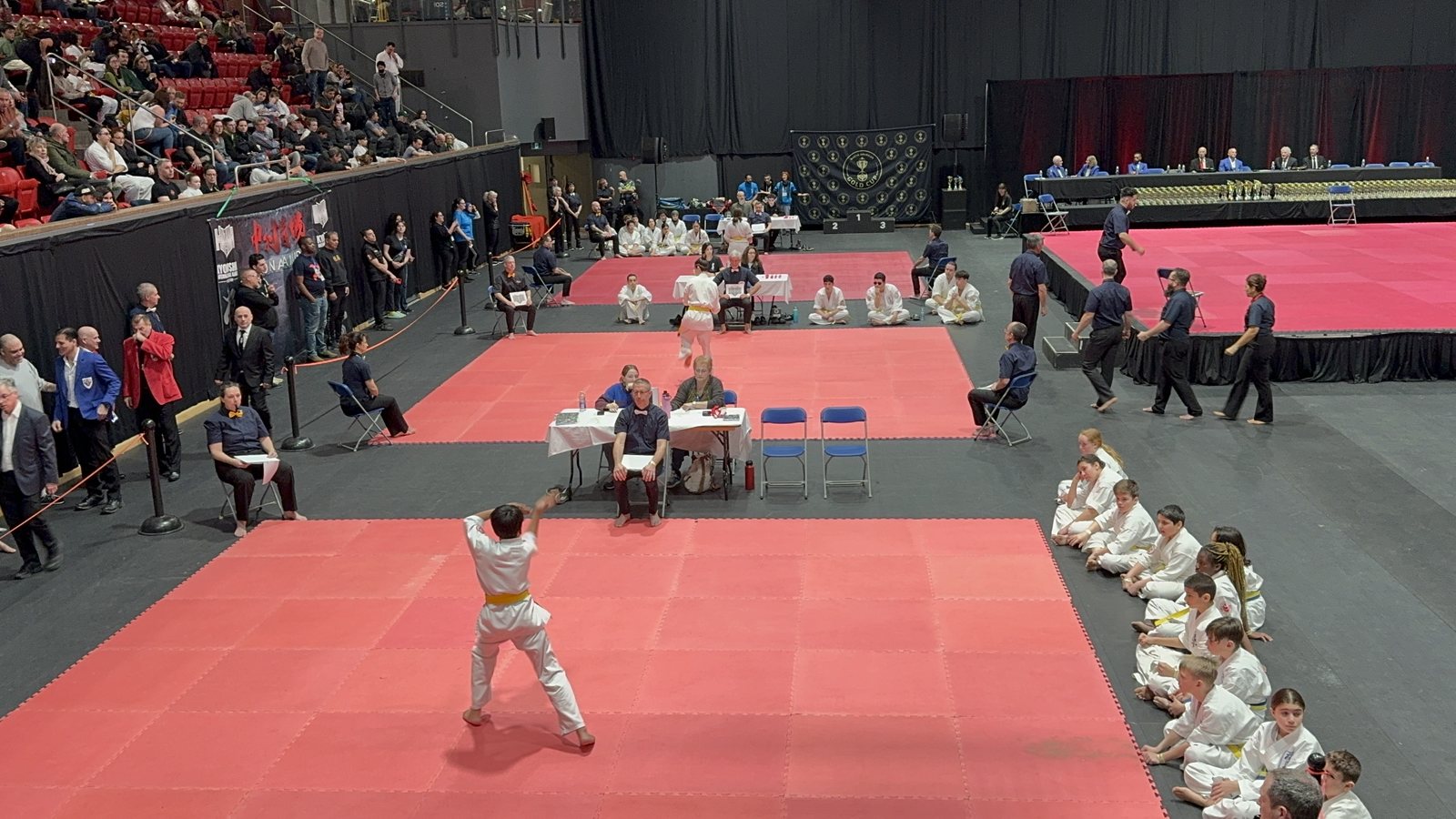
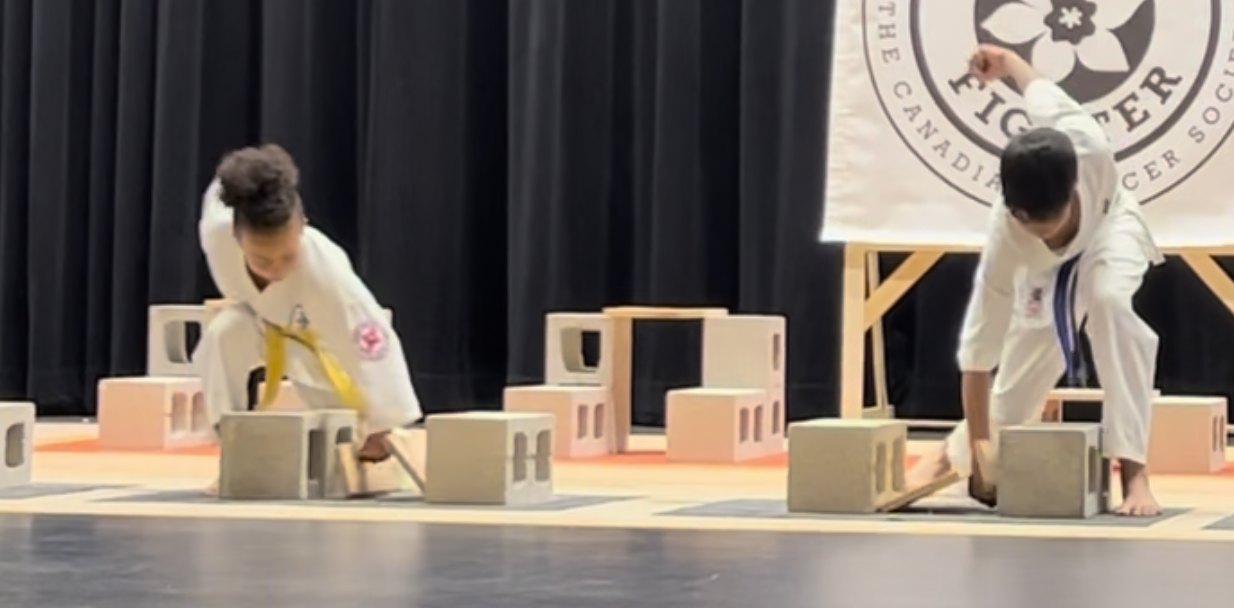
Every belt has its program — clear goals, known from the start, achievable with work. Gradings and, for those who want it, competitions give kids concrete milestones to measure their progress and be proud of it.
Before the first class
My child has never done karate. Will they keep up?
Everyone was a beginner once. Moves are broken down into simple steps and every child gets individual corrections. They progress at their own pace, and confidence follows.
From what age?
Our kids' classes welcome children aged 4 to 13, grouped by age and level. Check the schedule for your child's group.
Is it safe?
Classes take place on cushioned mats, with protective gear (helmet, gloves, shin guards) for sparring. Every technique is explained and demonstrated before it is practised, under the constant supervision of a black-belt instructor.
Can we try before signing up?
Yes: the first trial class is free and without commitment. Fill in the form and we'll suggest a date.
Do we need to buy equipment?
For the trial, sports clothes are enough. The karategi (uniform) and protective gear can be bought at the dojo afterwards.
How do belts work?
Each belt corresponds to a precise program (stances, techniques, kata, fitness test). Goals are known from the start and gradings mark the year — each one a moment of pride.
Give them a first class
Free, no commitment. Sports clothes, a water bottle — and the will to try.