Technique
Kihon and kata: working on the basics and refining each movement.
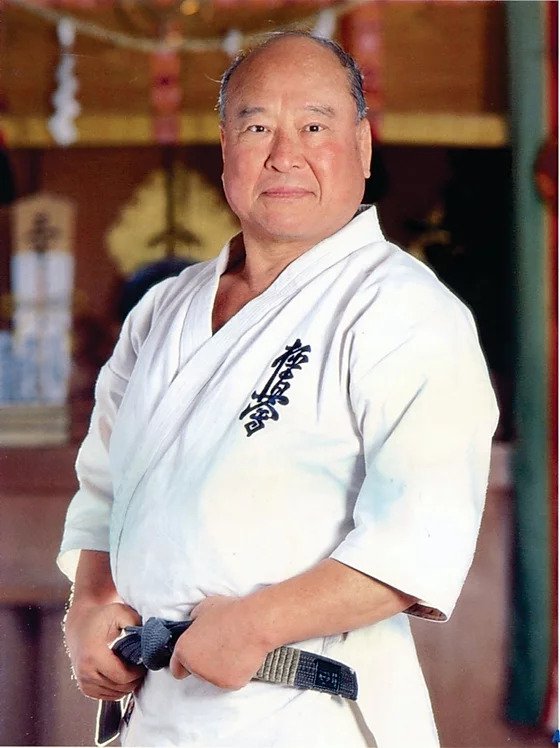
Founder of Kyokushinkai
1923 — 1994
A life devoted to the martial arts.
A legacy passed on in the dojo.
KYOKUSHINKAI
Kyokushin brings together technique, endurance and discipline. Its training engages body and mind in a single path of progress.
MILESTONES
Masutatsu Oyama is born in Korea.
The Honbu Dojo opens and the name Kyokushinkai is adopted.
Dies in Tokyo. His legacy lives on through practice.
HIS JOURNEY
Explore the stages of his life and how his teaching took shape.
Masutatsu Oyama (born July 27, 1923 near Gimje, Korea; died April 26, 1994 in Tokyo, Japan) was a Korean martial arts expert and founder of Kyokushinkai karate, a style that subjects students to rigorous training to harden body and mind, in order to detach as much as possible from mankind's greatest fear: death.
Masutatsu Oyama's real name was Choi Young-I, though for much of his life he went by Choi Bae-Dal (Bae-Dal meaning the Korean people). He was born into an aristocratic family; his father Sun Hyang was mayor of Gimje. From age 9 he discovered Southern Chinese Kempo and the ancient martial arts of Korea. Goju-ryu would later become the second karate style he was taught.
As a teenager, Mas Oyama was a restless boy; his father sent him to the Yamanashi military school in Japan at age 14. He then pursued his passion for martial arts in Tokyo, learning from the greatest masters including Funakoshi Gichin, considered the father of modern karate and creator of Shotokan. A fast learner, he reached Nidan (2nd dan black belt) in two years and Yondan (4th dan) at age 20. It is said that in 1947 he won the first "All Japan Tournament" bringing together all karate-do styles. In 1948, when judo resumed in Japan, Oyama pursued that fighting style as well, earning his 4th dan in only 4 years.
On the advice of his friend So Nei Chu, a Goju-ryu expert, he retreated to the Kiyosumi mountains to meditate and deepen his knowledge. Oyama imposed on himself harsh, disciplined training, drawing on his experience across martial arts styles: Southern Chinese Kempo and Goju-ryu movements, the linear principles of Shotokan, sweeps and leg attacks, plus a breathing technique (IBUKI). He remained there fourteen months before returning to civilization.
Back in 1950, he tested his strength against a bull — he faced 52 in his lifetime, most often simply breaking their horns with a knife-hand strike. In 1952 he began a triumphant tour of demonstrations and challenges in the United States, then in Asia, where he faced karatekas, boxers, wrestlers and other opponents, dominating them all. In 1953 he opened his first Dojo in Tokyo's Meijiro district. 1964 saw the opening of the first Honbu Dojo — it was then that Master Oyama named his style Kyokushinkai, "the school of ultimate truth." Fights are decided by knockout; breaking and endurance let students test and surpass themselves; Kihon and Kata are the main tools for progressing along the "way."
Kyokushinkai karate relies on rock-solid physical conditioning, resistance and mental strength, added to traditional karate techniques and exceptional flexibility. A film titled "Fighter in the Wind" was made in the master's honour, depicting the prodigy's meteoric rise.
Biographies of Mas Oyama vary considerably, due in part to his Korean origins and to the Asian oral tradition that amplified his exploits. But one thing is fact: Mas Oyama is and will forever remain one of the greatest masters modern karate has ever known. He was mourned by more than 15 million practitioners in over 130 countries, making the International Kyokushin Organization one of the largest and most prestigious martial arts organizations in the world.
FROM THE FOUNDER TO THE DOJO
Kihon and kata: working on the basics and refining each movement.
Building endurance and progressing steadily.
Giving direction to effort, class after class.
SHINKYOKUSHIN · NUNS’ ISLAND
Type at least two letters. Arrow keys move through the suggestions, Enter opens the chosen guide, Escape closes the list.